
Whether it's a cracked tooth or deep decay reaching the pulp, Root Canal Treatment in Lambert starts with imaging to confirm what's actually happening. Smile Center Dentistry uses digital X-rays and, when needed, an apex locator to treat the canal precisely.
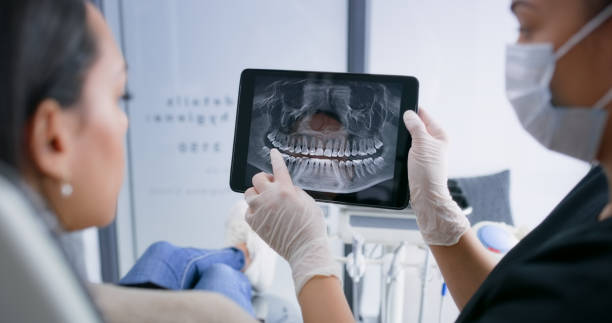
We use imaging to confirm the diagnosis before recommending treatment, not just responding to reported pain. We'd rather take an extra ten minutes with the apex locator than leave canal length to a guess.
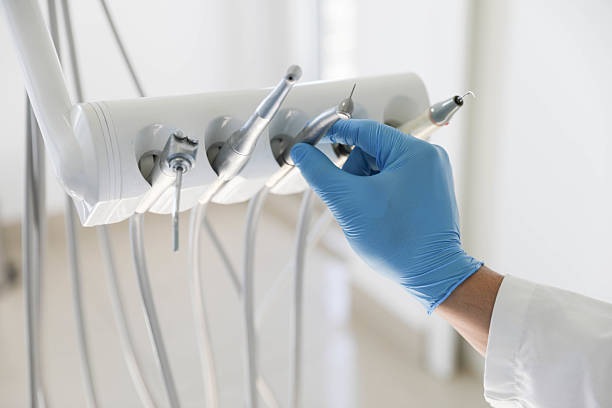
An apex locator helps measure canal length precisely during treatment, reducing guesswork. We'd rather over-image than under-treat a tooth that could still be saved.
Modern anesthesia techniques keep the procedure comfortable — most patients report less discomfort than expected. Comfort checks happen throughout, not just at the very start.
Infected or badly decayed teeth don't wait well, so we prioritize root canal cases for same-week scheduling. Same-week availability applies whether you're a longtime patient or calling us for the first time.
Post-treatment protection is part of the plan from day one, so the tooth stays saved long-term. We schedule the crown appointment before you even leave your root canal visit.
Here's what's typically involved once imaging confirms treatment is needed.
We rule out a simple filling before recommending the more involved root canal procedure. This step alone often explains pain patients couldn't previously identify.
Infected pulp tissue is removed and the canal is cleaned and shaped to prepare it for filling. This is the core of the procedure and where precision matters most.
A properly sealed canal is what keeps bacteria from returning to the treated tooth. We confirm the seal with a follow-up X-ray before moving to restoration.
Not every root canal needs this step — we explain when your specific tooth requires it. This step is planned before crown placement, not decided last minute.
A crown protects a root-canal-treated tooth from fracture, since it's more brittle without its nerve supply. Material options are discussed based on which tooth and how much force it takes when chewing.
Retreatment involves reopening the tooth, cleaning it again, and resealing — more involved than the original procedure. We explain honestly whether your specific tooth is still a good save candidate.
We triage by phone to determine how quickly you need to be seen.
Digital X-rays and sensitivity testing confirm whether the nerve is involved and treatment is needed.
The canal is cleaned, shaped, and filled under local anesthesia, typically in one to two visits.
A crown or filling restores the tooth's strength, with a follow-up to confirm healing.
"Put off calling for weeks because I dreaded a root canal. It was genuinely nothing like what I feared."
"Got in the same week I called with severe pain. Anesthesia worked well and I felt nothing during the procedure."
"Two visits total — cleaning and shaping first, crown fitted a couple weeks later. Tooth feels completely normal now."
"Follow-up X-ray confirmed everything sealed properly. Nice to have that confirmation instead of just hoping."
"Needed retreatment on an old root canal from another dentist years ago. They explained clearly why it had failed and what was different this time."
Lingering pain to hot or cold, especially if it wakes you at night, often points to nerve involvement that a filling can't fix. A filling addresses surface decay; a root canal addresses infection reaching the nerve — imaging tells us which applies.
Modern anesthesia and technique make it far more comfortable than its reputation suggests — most patients report mild discomfort at most. Most patients tell us it was easier than they braced themselves for.
We tell you which applies to your case after imaging, not as a generic estimate. Multi-canal back teeth sometimes take longer than single-canal front teeth.
Often yes, since the tooth becomes more brittle without its nerve supply — we discuss this at your first visit. Skipping a needed crown risks the tooth fracturing later, which we explain clearly.
Delaying rarely makes the problem go away — it typically makes treatment more complicated later. An untreated infection can also spread beyond the tooth itself in more serious cases.
We break out the root canal and crown costs separately so you understand the full picture. Molars with multiple canals typically cost more than single-canal front teeth.
Our team serves Lambert and the surrounding zip codes with digital imaging on-site at every location. Whether it's your first root canal or a retreatment case, our Lambert team handles both in-house.
Licensed, imaging-equipped, and local to Lambert — call and get a real diagnosis.
Call +1-866-227-2801